

Medically reviewed by Dr. Dean Severidt, Director of Medical Excellence, on September 16, 2026
Winter doesn't have to change much about your daily routine with your dog or cat. A few small adjustments, like checking paws after a walk or moving their bed to a warm spot, go a long way toward keeping them comfortable when temperatures drop.
Winters in Jessup can bring snow, sleet, and freezing rain, sometimes in the same storm, and treated roads and sidewalks are common all season. All of that is tough on paw pads and makes it harder for pets to stay comfortable outside.
At Premier Dog Training, we offer daycare, boarding, grooming, and training, including board-and-train programs with lifetime follow-ups.
Here's how to get your dog or cat ready for colder weather.
How Cold Is Too Cold for Your Dog or Cat in Jessup, MD
Not every dog reacts to cold the same way. Size, age, coat thickness, and how much time they normally spend outside all play a role. A short-haired dog or a small breed will likely feel a chill faster than a husky who’s bred for snow. Puppies and older dogs tend to be more sensitive too.
Your dog is the best indicator of whether it's too cold outside. Shivering, lifting a paw off the ground, slowing down, or heading straight for the door are all signs they're ready to come in. Cats who spend time outdoors give similar cues: seeking shelter, moving less, or simply asking to come inside sooner than usual.
If you notice these signs, bring them in and let them warm up. That's usually all it takes.
Protecting Your Dog's Paws from Snow, Salt, and Ice
Winter sidewalks bring more than snow. Salt and de-icing products can irritate paw pads, and pets often lick their feet afterward, which can irritate their stomach or, in some cases, be toxic.
After a walk, check between your dog's toes for ice balls or salt residue. A quick wipe with a damp cloth, or a rinse with lukewarm water, clears most of it. Dry their paws well afterward, especially between the toes. Trimming the fur between paw pads cuts down on the ice balls, and our groomers can take care of it at your next visit.
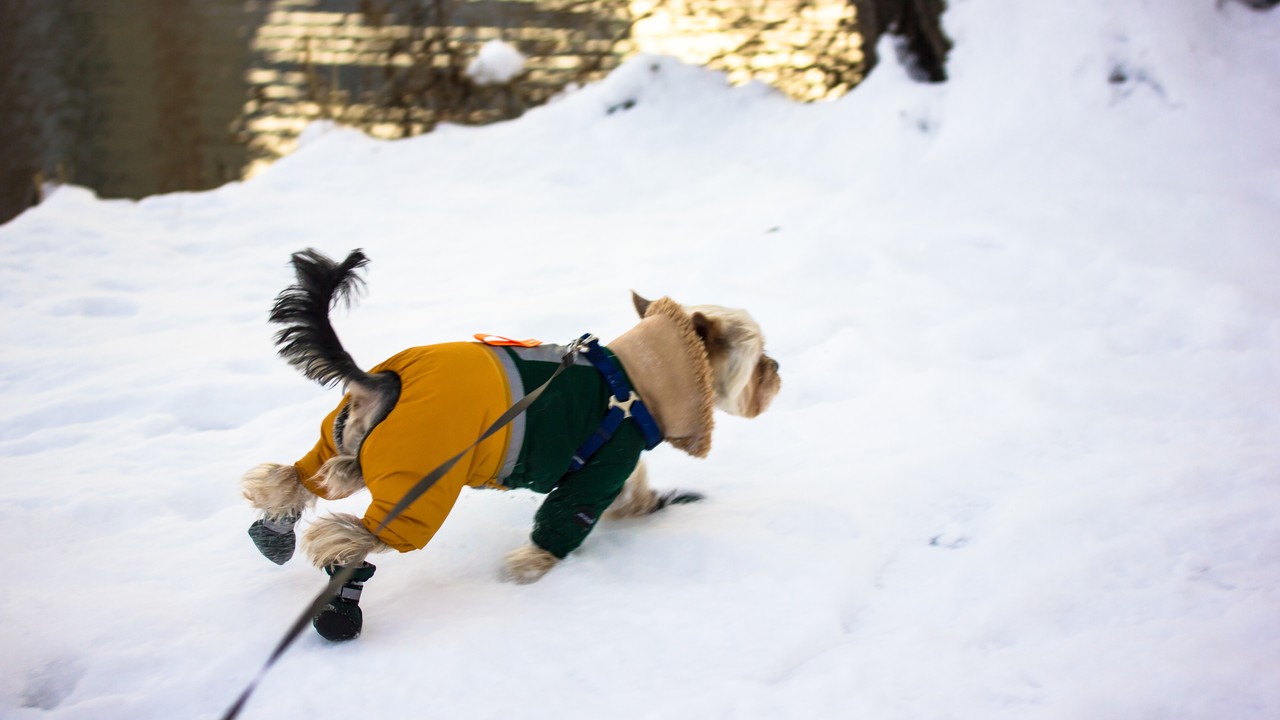
If your dog tolerates them, booties add a layer of protection between paws and treated sidewalks. A paw balm made for winter conditions can also soften and protect skin that's starting to look dry or cracked.
A clear path helps too, especially for small dogs. Big dogs move through snow faster, but small ones can end up wading through drifts that cling to their belly and legs. Clearing a path outside cuts down on that exposure altogether.
If your dog’s paw pads look cracked, swollen, or seem tender to the touch, it's worth a quick visit to your veterinarian.
Antifreeze and Other Winter Hazards for Pets
Antifreeze is one of the more serious winter hazards, mostly because pets are drawn to it. Ethylene glycol, the main ingredient in traditional antifreeze, has a sweet taste that can attract dogs and cats. Store it somewhere sealed and out of reach and clean up any spills right away.
If you know or suspect your dog or cat got into antifreeze, don't wait to see if symptoms show up. Call your vet or an animal poison control hotline right away and let them guide you on next steps.
De-icing products deserve a similar level of attention. Ingredients vary by brand, so even a product labeled pet-friendly or pet-safe can cause stomach upset or other problems if ingested. Wipe off your dog's paws after a walk, just as a precaution.
Cats often find warm spots on their own when indoor temperatures dip. Just make sure those choices are safe. Check that they haven't climbed into open appliances like clothes dryers or settled too close to portable space heaters.
Does Your Dog Need a Sweater or Coat This Winter?
Some dogs genuinely benefit from a coat during winter walks. Others couldn't care less about the temperature. Small dogs, seniors, and short-coated breeds are usually the ones who'll appreciate the extra layer – especially if their undercarriage touches the ground. For senior dogs with arthritis or joint stiffness, cold weather can make getting around more difficult, so keep an eye out for changes in how comfortably they move.
Fit matters more than style. A sweater or coat should move with your dog, not restrict their shoulders or rub against their skin. Give them a day or two to get used to wearing one before a long walk and never leave a dog unsupervised in clothing that could snag on something.
A coat helps with comfort, not immunity. If your dog seems ready to head inside, that's still the cue to listen to.
Winter Dog Walking Safety After Dark
With winter's shorter days, a lot of walks end up happening before sunrise or after sunset. When it's dark and the roads are icy or snow-covered, drivers have a harder time seeing you and less room to react.
If you're out early or late, reflective gear, an LED leash, or a reflective collar ensures drivers can spot you and your dog from a distance. If your dog is shivering, lifting their paws, or reluctant to continue in the dark and cold, keep the outing brief and head straight back to somewhere warm and dry.
Watching for Frostbite on Ears, Paws, and Tails
These are the areas with the least insulation, so they're worth an extra glance after time outside in genuinely cold conditions. For cats, the tips of the ears are especially vulnerable to frostbite. After a longer outdoor stretch, check for unusual swelling, color change, or sensitivity, particularly around the ears, paw pads, and tip of the tail.
This isn't something to worry about on a typical walk around the block. It matters more on days with extended time outside in harsh conditions. If something looks off, bring them inside to warm up gradually and check in with your vet. Avoid rubbing or massaging the area.
Keeping Your Pet's Water Bowl from Freezing
If your dog or cat spends any time outside, check their water bowl more than once a day. Water left outdoors can freeze in a matter of hours, even when it doesn't feel especially cold. A heated bowl or a quick swap for fresh water a couple times a day keeps them from going without hydration.
Inside, keep bowls full and easy to reach. Cats in particular tend to drink more from moving water, so a fountain can help keep them interested.
Indoor Activities for Dogs and Cats on Snow Days
When winter makes walks and outdoor play impractical, your pets still need opportunities for physical activity and mental engagement.
A few easy options:
Short training sessions with treats and positive reinforcement
Food puzzles or slow feeders
A round of fetch or hide-and-seek somewhere safe indoors
Letting your dog sniff around new corners of the house
Rotating toys so old favorites feel new again
The American Animal Hospital Association points to puzzle toys, training, and interactive games as solid ways to keep pets mentally engaged when outdoor time is limited.
Cats do well with the same idea. Food puzzles, a window perch, or a few minutes of wand-toy play can provide a lot of enrichment.
On days when it's too cold for a long walk, daycare at Premier Dog Training gives your dog a warm place to play and burn off energy with friends.
Keeping Your Pet's Bed Warm and Draft-Free
A small shift in where your pet sleeps can make a real difference once temperatures drop. The ASPCA recommends keeping sleeping areas elevated off cold floors and away from drafts.
A dry pet makes for a warmer bed, too. If your dog or cat comes in from the snow, give them a quick towel-dry before they settle in, especially around the paws and between the toes. Their bedding stays dry and cozy, and they warm up faster.
Check Under the Hood: Protecting Outdoor Cats in Winter
Outdoor and community cats sometimes look for warmth in unexpected places, including under car hoods. Cornell University's College of Veterinary Medicine recommends knocking on the hood or honking the horn before starting your car in cold weather, just to give any cat nearby a chance to move.
Your Winter Pet Safety Checklist
None of this requires an overhaul of your routine. A few small habits go a long way:
Bring pets in at the first sign of cold.
Wipe and dry paws after walks.
Store antifreeze safely and keep cats away from dryers and heaters.
Add a coat for small, senior, or short-coated dogs.
Wear reflective gear on dark walks.
Check ears, paws, and tails after long stretches outside.
Keep outdoor water bowls from freezing.
Plan indoor play on snow days.
Keep beds off cold floors and away from drafts.
Knock on your car hood before starting the engine.
A little attention now means fewer surprises later and a dog or cat who's just as comfortable in January as they were in October.
Want a warm, safe place for your dog or cat this winter? Book daycare, boarding, or grooming at Premier Dog Training in Jessup, MD.
Frequently Asked Questions About Winter Pet Care
How do I know if my dog or cat is too cold?
Watch your dog instead of the thermometer. Shivering, lifting a paw off the ground, slowing down, or heading straight for the door are all signs they're ready to come in. Cats who spend time outdoors give similar cues, seeking shelter, moving less, or asking to come inside sooner than usual.
Can dogs get frostbite on their paws or ears?
Yes. Frostbite can affect a dog's ears, paws, tail, and other areas with less insulation after prolonged exposure to extreme cold. Look for swelling, unusual skin color, or sensitivity to touch. If you suspect frostbite, bring your dog inside, warm them gradually, and contact your veterinarian. Do not rub or massage the affected area.
What are the signs of hypothermia in dogs and cats?
Early signs can include shivering, weakness, and cool or pale skin. As hypothermia becomes more severe, a pet may become lethargic, confused, or have slow breathing or a slow heart rate. If you suspect your dog or cat is hypothermic, bring them inside and contact your veterinarian right away.
Does my dog need a sweater in the winter?
It depends on the dog. Small dogs, seniors, and short-coated breeds are usually the ones who can use the extra layer, especially if their undercarriage touches the ground. The fit is important, too. A sweater or coat should move with your dog, not restrict them or rub against their skin.
Is antifreeze dangerous for dogs and cats?
Yes. Ethylene glycol, the main ingredient in traditional antifreeze, has a sweet taste that can attract dogs and cats. Store it somewhere sealed and out of reach. Be sure to clean up any spills right away. If you suspect your pet got into it, call your vet or an animal poison control hotline right away.
What are the symptoms of antifreeze poisoning in pets?
Early signs can include vomiting, drooling, stumbling, unusual thirst, increased urination, and lethargy. As poisoning progresses, pets may develop more serious symptoms, including difficulty breathing, seizures, or severe lethargy. If you suspect your pet has ingested antifreeze, don't wait for symptoms. Contact your veterinarian or an animal poison control center right away.
How can I keep my dog or cat active on cold or snowy days?
Food puzzles, short training sessions, a round of fetch or hide-and-seek indoors, and rotating toys all help keep your dog entertained when outdoor play isn't in the cards. Cats do well with food puzzles, a window perch, or a few minutes of wand-toy play.
Sources
American Animal Hospital Association. “Cold Weather Pet Safety Tips for Dogs and Cats.” December 17, 2024. AAHA
Cornell University College of Veterinary Medicine. “Winter Safety Tips.” Cornell University College of Veterinary Medicine
Cornell University College of Veterinary Medicine. “Keeping Your Furry Friends Safe During Winter Weather.” January 29, 2021. Cornell University College of Veterinary Medicine
ASPCA. “Cold Weather Safety Tips.” ASPCA
American Animal Hospital Association. “Grey Muzzles Make Cozy Companions: Tips to Care for Your Senior Pet in the Winter.” January 8, 2025. AAHA